Welcome to Great Doddington Youth Football Club
Celebrating 20 Years of Youth Football.
In March 2003, Great Doddington Youth Football Club was formed. In September 2003, one Under 8 team and one Under 9 team were entered into the Weetabix League for the 2003/04 Season. 20 years on, hundreds of boys and girls have played football for the club. It wouldn't have been possible without all the volunteers that have given their time over the years. The final word must go to the founders of the club who had a vision 20 years ago, that is still being realised today. So thank you to Kevin, Chris, Barry and Josh.
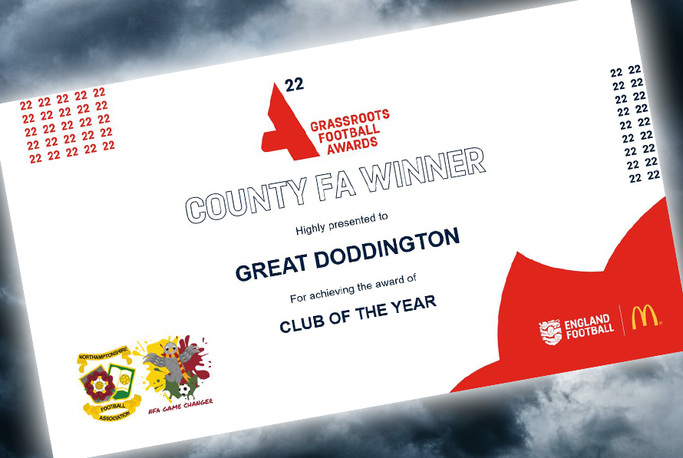
Proud to be NFA Grassroots Club of the Year 2022
RIP Steve Catling
GDFC Secretary
Sadly missed by all at GDYFC
About Great Doddington Youth Football Club
Great Doddington Youth Football Club was formed in 2003 and continues to provide youth football for children and young people from Great Doddington and the surrounding towns and villages. Currently the Club has age groups ranging from under 8 to under 14. The teams compete in the Weetabix Youth Football League. GDYFC was awarded the Weetabix Youth Football League Club of the Year shield for the 2007/2008 season. GDYFC were also named NFA Grassroots Club of the Year 2022. The club achieved Charter Standard status in 2015, and are now an England Football Accredited Club, meaning all managers, coaches and volunteers hold the relevant FA coaching, safeguarding and emergency aid qualifications. All managers, coaches and volunteers are DBS checked.
Our goals:
- To provide football for children of all ages and abilities in a fun, safe and positive environment.
- To deliver age appropriate coaching for children and young people, to support their journey through the different formats of the game
- To make our club inclusive for all children and young people.
- To promote good behaviour and respect for others
- To develop children on and off the pitch not only as players but as young people as well.
- To ensure all players play within the rules of the game
- Promote the importance of Teamwork
- Play to win but not at the cost of development
- Harness creativity
- Inspire a love for football
- To make all players to be proud to be associated with GDYFC.
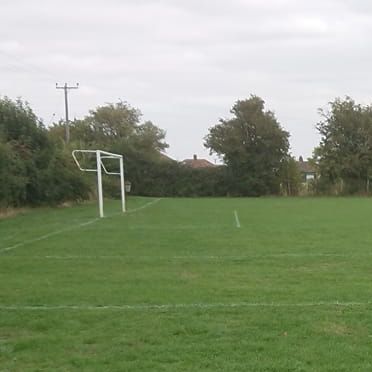
Our Home
Recreation Field, Memorial Hall Entrance (no parking), High Street, Great Doddington, Northamptonshire NN29 7TR
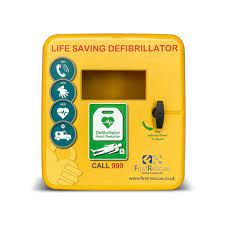
Defibrillator
Our Club has access to the village Defib, which is located right next to our football pitches. The defib location is: (mounted on an outside wall near the entrance door) Great Doddington Memorial Hall, High St, Great Doddington, Wellingborough NN29 7TR. There is also a Defib in the metal cabinet in the Pavilion changing rooms.
Matchday Parking
There is limited parking around the Recreation Ground. Visitors are welcome to park at The Great Doddington Club where there is ample parking.
41 Lower Street, Great Doddington, Wellingborough NN29 7TL
Telephone: 01933 226009
https://doddyclub.co.uk/
Opening Times:
Monday - 7PM to 10PM
(1st Monday of month only)
Tuesday / Wednesday - Closed
Thursday - 7PM to 11PM
Friday - 4PM to 11PM
Saturday - 12PM to 8PM
Sunday - 12PM to 8PM
The Great Doddington Club has been at the heart of the village for over a century and is a real community space. Starting out as a working men’s club, it is now a private club which welcomes new members throughout the year. Children are welcome and we are dog-friendly.
The Club offers a great drinks selection at very reasonable prices, freshly cooked food served on Friday evenings and Sunday lunchtimes and both Sky Sports & BT Sport.
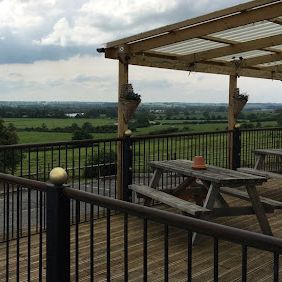
One of the main attractions of the Club is the fabulous uninterrupted view across the Nene Valley which you can admire from the large picture windows or from the outside terrace. On a good day it is possible to see seven village churches, the River Nene and Summer Leys Nature Reserve – where else could you see all this over a relaxing drink?
How to find us
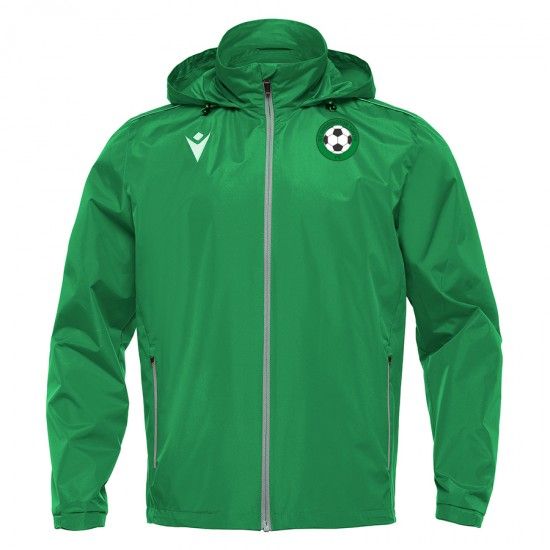
Macron Club Store
Macron Store Northamptonshire provide Macron branded teamwear and leisure wear to the local sports community. We also provide workwear with embroidery and garment decoration services across a number of industries.
Macron are a global teamwear and leisurewear provider with technical partnerships with major sports clubs around the world for example. Lazio, Sporting Lisbon, Stoke City, Crystal Palace, Adelaide City, Glasgow Warriors, Scotland Rugby and Northampton Saints to name a few.
Macron offer a unique service to the local grass roots sporting community with their Macron Store concept providing a bespoke offering on a global scale.
MSN Teamwear Ltd T/A Macron Store Northamptonshire - 38c Telford Way Ind Est, Kettering, Northamptonshire, NN16 8UN
We need your consent to load the translations
We use a third-party service to translate the website content that may collect data about your activity. Please review the details and accept the service to view the translations.